


2026 DCG Conference Highlights: Key Takeaways from Boston

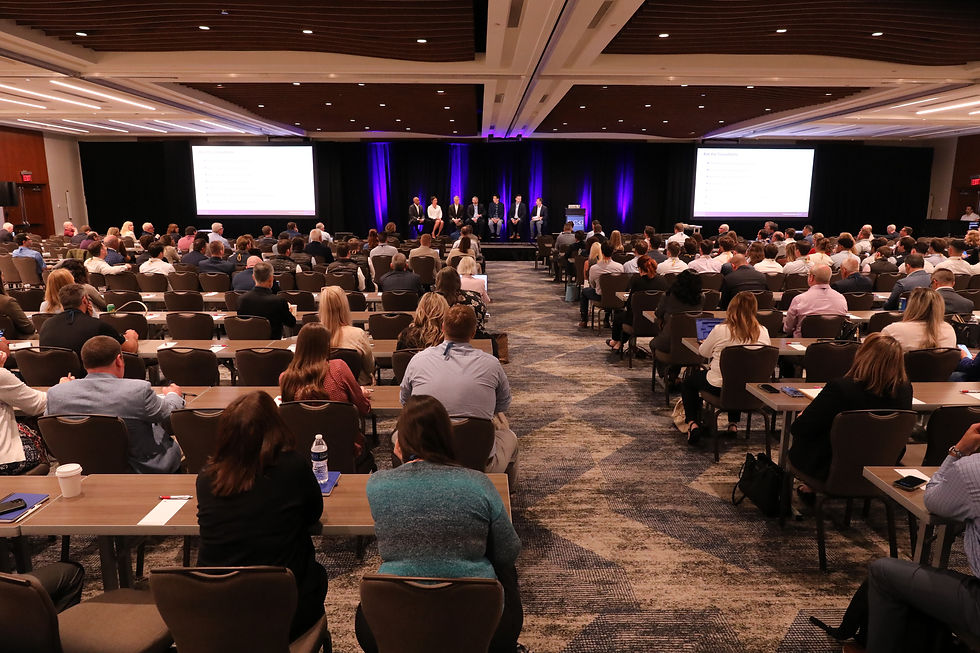
The 42nd Annual DCG Balance Sheet & Model Risk Management Conference recently concluded after three energetic days of idea sharing amongst 300 industry colleagues. It sounds cliché, and easy to say fresh off the elation of the conference, but this year felt like the best conference yet. Thank you to all who attended and contributed to this special event.
June is a wonderful time of year in Boston. The weather officially turns a corner after what typically feels like a long winter. With that change in climate comes the beautiful sight of boats filling Boston Harbor. In his opening remarks, DCG’s President & CEO Matt Pienaziek highlighted the similarities between sailing and the current banking environment.
2025 was a year of tailwinds. Most groups experienced sizeable margin expansion with assets recycling into higher rates while obtaining funding cost relief.
But the winds are shifting in 2026. With the Fed on pause, liquidity management and deposit pricing are becoming challenging. Loan spreads have contracted. The race to adopt AI is on. Competition from fintechs, tokenized deposits, and stablecoins is on the minds of most leadership teams. This abrupt shift in winds is creating a navigation challenge.
Within this challenge lies the opportunity to think differently and leverage data to better understand changes in wind patterns and adjust the sails to help ensure continued success out on the banking waters.
From the Editor
The DCG 42nd Annual Balance Sheet Conference was once again hosted at the Marriott Long Wharf Hotel in Boston. In his opening remarks, DCG President Matt Pienaziek referenced the forthcoming 250th anniversary of our country’s independence from Britain. Specifically, the famous ride by Paul Revere, which galvanized local militias (known as “Minutemen”) and alerted everyone that “The British are coming.”
What attendees might not have known is that they were seated on the exact same wharf that was once owned by John Hancock, the first signer of the Declaration of Independence. Hancock operated his merchant empire out of a building adjacent to the hotel, located at 60 Long Wharf. This circa-1763 brick warehouse is still standing and operates as the Chart Room restaurant that attendees frequent.
The foundational tenets of that document remain the bedrock of our country. In this context, it’s hard not to draw parallels to the guiding principles learned at the conference for managing risk at community financial institutions today. While we would all certainly acknowledge that the industry has evolved over time, we can also refer to time-tested philosophies when contemplating the best course of action for your institution.
Fortunately, for those who couldn’t attend in person, DCG Director Jeff Croteau prepared a detailed summary of the sessions offered at the recent conference. I’d highly recommend a perusal of Jeff’s Bulletin, as it does a great job identifying key takeaways from the various sessions.
And for those who couldn’t join us this year, we’d love to see you next year in historic Boston for the 43rd conference.
Happy Independence Day to all!!!!
Vinny Clevenger, Managing Director
Raising the Bar: What High-Performing Institutions Are Doing with Deposit and Loan Analytics
The event kicked off with a workshop focused on the importance of data and highlighting banking’s data revolution. DCG's Matt Pieniazek explained that while everyone uses “data analytics,” the spectrum of how institutions actually leverage data is very broad. Many are just aggregating data, where ultimately, data must be predictive and help tell stories and make decisions. Having a strong data set will also be a critical foundation of the AI explosion.
DCG consultants delved deep into deposit and loan data. The deposit discussion focused on deposit retention and depositor stickiness, forecasting to better understand how pricing decisions may impact volume, and tracking cannibalization and marginal cost of funds. Loan discussions centered around the slowing of margin tailwinds, how tighter credit spreads are impacting volume needs and income, and the importance of understanding behavior patterns for both low and high coupon borrowers.
Deposits
Speakers emphasized that deposit pricing should not simply be a reaction to competitor rates. Every institution has a different liquidity position, loan demand, and strategic objectives, so competitive influence should be minimized. They discussed the importance of understanding the cost differences between obtaining and retaining CDs. At this stage of the rate cycle, CDs are largely a renewal game, and high-rate offerings can risk increasing marginal cost of funds and cannibalization when a lower offering rate may have retained most balances. Any runoff can often be replaced with wholesale funding at a lower marginal cost. Premium MMDAs are currently outperforming CDs, and tiering remains a critical component of an effective deposit strategy. While some cannibalization is inevitable, data analytics can help distinguish between winning and losing deposit offerings.
Another session featured two banks that currently use Deposits360°® to build strategy. Kennebec Savings recently used deposit analytics to create targeted money market specials and refine CD pricing. Pathfinder Bank used the data to create a deposit “stickiness” score that ranks how likely deposits are to remain at the bank. They both emphasized how important actionable deposit data is to their internal pricing and strategy meetings.
Vantage Bank’s Shawn Main presented on tokenized deposits and stablecoins. Sean explained that tokenized deposits and stablecoins are here to stay and could pose a meaningful risk to traditional bank and credit union deposits if institutions dismiss them too quickly. He asserted that consumer interest is likely to grow as these products combine the safety and familiarity of deposits with the ability to move, settle, and use funds more efficiently than traditional accounts and wire transfers. Institutions may not need to build their own stablecoin or tokenized deposit platforms given the significant upfront costs, but they may consider being fast followers and recognize that the banking landscape will continue to evolve.
Liquidity and Alternative Funding
To prepare for the unexpected, sessions discussed the importance of risk monitoring and stress testing. Keeping a close eye on key metrics and understanding the impact significant events can have on liquidity availability allows management to make timely changes. And ensuring that the contingency funding plan is up to date provides the all-important safety net in the event surprises do indeed occur. DCG speakers walked through the proverbial “liquidity fire drill,” which has allowed many organizations to identify gaps in the process and “patch the holes.”
Sessions also highlighted the details of many investment classes and explained current investment opportunities and market dynamics. Bond yields have become increasingly more attractive, particularly when compared to certain loan class alternatives. Today, it is possible to purchase a risk-free MBS yielding in the high 4% to low 5% range at a discount. Speakers emphasized the importance of being able to read a Bloomberg® YT screen and clearly explain the structure of the investments being purchased. Practitioners should never let brokers pressure them into buying something they can’t explain themselves; brokers have been observed presenting certain CMO structures and giving the impression that there is little risk involved with an expectation of exceptional returns. Remember, there is no free lunch.
Lending & Credit
Presenters discussed recent yield curve movements and their impact on lending conversations with clients. They highlighted several challenges, including tighter loan spreads and increased prepayment activity on higher-rate loans, both of which have limited margin improvement. Institutions must avoid turning loan pricing into a race to the bottom. A 25-basis-point pricing change can significantly affect either the volume needed to achieve the same results or the value created through stronger pricing discipline.
Loan origination rates in Q1 2026 within DCG’s Loans360°® dataset were down 74 basis points year over year, despite the 5-Year CMT rebounding to levels similar to a year ago. Encouragingly, DCG models forecast higher loan origination rates if interest rates remain stable. Speakers also stressed the importance of implementing and enforcing loan prepayment penalties and floors. Since falling-rate protection can be expensive in the derivatives market, those costs should be considered when structuring loans.
The program also covered credit trends in the current environment, with speakers using Loans360°® data to highlight emerging credit trends for multiple asset classes. While it may be unlikely that any institution faces major credit issues (given current economic conditions), ignoring this risk could be catastrophic. It is important to quantify how bad things could get under different recessionary environments and economic conditions to better understand if capital levels are adequate to absorb these potential losses.
Economist Chris Low
During the economic keynote session, FHN Financial Chief Economist Chris Low highlighted that artificial intelligence investment has become a major driver of recent U.S. economic growth, contributing to record levels of GDP expansion, while increased onshoring activity has supported domestic labor demand more recently. Looking ahead, he indicated that the Federal Reserve is unlikely to cut rates through 2026 and into 2027, citing stronger-than-expected payroll growth, upward revisions to employment data, and market expectations that now include the possibility of a rate hike by the end of 2026. Low noted that job creation has become increasingly concentrated in the leisure and hospitality and healthcare sectors, while inflation pressures remain elevated and are likely to exceed 4% during the next data release. The session concluded with discussion around the Federal Reserve’s long-term balance sheet reduction strategy and the potential policy direction under Kevin Warsh, which includes a shift toward more limited and streamlined Fed communications.
For more insight into Chris Low’s commentary, check out the latest episode of DCG’s On the Balance Sheet® podcast, recorded live at the conference.
Peer Group Discussions
Each year, small groups of attendees at similarly sized institutions meet in breakout rooms to talk shop amongst their peers. This has consistently been rated one of the most valuable sessions for attendees. This year, areas of discussion were vast.
Liquidity management and deposit gathering are still top of mind, as peers shared ideas about pricing strategies with the Fed on hold and competition reigniting.
Loan pipelines and loan spreads were another popular topic. Those with tepid loan demand and continued competitive pricing pressures examined the investment markets as an alternative.
Protecting against worst case earnings scenarios through the derivatives market came up several times. With the yield curve steepening and an increased expectation of rate hikes leading up to the conference, some asset sensitive institutions took advantage of market shift and executed floors, buying themselves falling rate protection. Many liability sensitive groups wondered, "Should I still look at buying insurance, or did I miss my window?"
AI was another frequent discussion point. FIs were asking for business use cases, how others are using and adopting AI, how other FIs are currently allowed to use it, how they are governing AI, and which specific tools they are using.
AI
Sessions provided a practical overview of how generative AI applications are built, validated, and governed, using a Retrieval-Augmented Generation (RAG) architecture and a Suspicious Activity Report (SAR) Narrative Assistant use case to illustrate real-world banking applications. Also highlighted were key validation considerations, including prompt review, data quality, hallucination and bias testing, evidence traceability, and human oversight controls. Speakers also explored mitigation strategies for AI risk, including human-in-the-loop (HITL) review and layered control frameworks.
At community banks and credit unions, most institutions allow some AI use but differ widely in risk tolerance. Most institutions build their AI policies using their existing MRM policies, but there are common blind spots that should be addressed, including explainability standards, AI-specific testing requirements, and dynamic performance monitoring.
In a panel discussion, speakers emphasized that AI governance should be built now, not deferred. Effective programs treat AI risk as a cross-functional responsibility spanning business, risk, IT, cybersecurity, compliance, legal, and model risk management, with clear accountability for models throughout their lifecycle. Institutions should leverage existing governance and MRM principles (inventory, validation, monitoring, escalation, and documentation), while adapting them for AI-specific challenges such as hallucinations, model drift, and non-deterministic outputs. On the cybersecurity front, AI is accelerating attack timelines, making rapid patching, AI inventories, enhanced vendor reviews, and controls around approved AI tools essential.
At the same time, the greater strategic risk for most organizations is moving too slowly. Successful adoption starts with strong security foundations, broad employee enablement, and consistent leadership communication. Innovation is most effective when driven by hands-on users across the organization, while emerging capabilities like agentic AI can deliver significant value today when grounded in trusted data, structured workflows, and appropriate human oversight. Finally, organizations shouldn't let future cost concerns delay experimentation; early pilots and enablement efforts are relatively inexpensive, while cost management becomes important as AI usage scales.
Model Risk Management (MRM)
The new change in MRM guidance (SR 26-2) was certainly on the minds of many attendees. A change to a more “risk-based” approach to MRM put the focus on performance monitoring, where sessions walked through the importance of ensuring models continue to perform as intended. With a focus on ALM and CECL, key elements of back testing, benchmarking and peer comparison were illustrated through case studies and “potential pitfalls” in modeling behavior.
And with the new revised MRM guidance, “right-sizing” MRM frameworks and validation cadences is more important than ever. Speakers emphasized these points in discussing Third Party Risk Management with Banking-as-a-Service, explaining many issues that can arise (and be identified) with the right validation approach.
The biggest takeaway with MRM is that while the guidance may have changed, the risks still remain, so practitioners should ensure processes to identify and manage risk are congruent with their risk profile and tolerance.
Core Track
In DCG’s perennial core track discussions, several DCG consultants covered key banking business basics, including measuring and managing interest rate risk, liquidity management, and balance sheet strategy.
Before taking action, institutions must develop a solid understanding of interest rate risk management. It is critical to run shocks, ramps, non-parallel scenarios, static and dynamic models, and stress tests to triangulate interest rate risk. While no institution will model risk perfectly, using multiple approaches helps develop a more complete understanding of balance sheet risks and supports better strategic decision-making.
Multiple sessions explored actionable balance sheet strategies that institutions may consider, including pre-investment of investment cashflows, prudent structuring of wholesale funding, deploying excess capital for growth, and using hedging tools such as interest rate swaps and caps to improve earnings stability and risk management.
Presenters explored DCG's philosophical approach to managing liquidity, "The Basic Surplus," in detail. They also touched on a potential shift in the entire liquidity landscape with continued evolution of technology, digital ledgers, stablecoin, and tokenized deposits. Future changes to the deposit landscape place greater emphasis on understanding and comfort with wholesale funding and collateral management (liquidity based upon the pledging of assets) than ever before.
Ask the Consultants
Back by popular demand, a mainstage panel of DCG consultants from across the organization responded to questions submitted by attendees in real time. The topics were vast, ranging from liquidity, deposit gathering, and interest rate risk, to CECL, AI, stablecoin, and model risk management, to name a few. As DCG Executive Director Keith Reagan stated multiple times, often the answer to the question is, “It depends.” For example, he was asked if he had $50MM to invest within the next 3 months, what bonds would he buy? There is no one-size-fits-all strategy out there. Multiple factors, such as a unique liquidity position, earnings profile, interest rate risk position, and many more, dictate what the right strategy may be.
Thank You and See You Next Year
If you were able to attend this year’s conference, we thank you for your continued support and hope you found the three days together to be valuable. For those who were unable to attend this year, we hope this summary provides good topics of conversation for your next ALCO meeting. For everyone reading, please mark your calendars and join us next year in Boston for the 43rd Annual Balance Sheet & Model Risk Management Conference on June 6-8, 2027.
For more insights from Darling Consulting Group, click here.
Jeff Croteau is a Director at Darling Consulting Group, where he assists financial institution executives in strengthening their asset liability management (ALM) process. In this role, he provides custom solutions for managing interest rate risk, liquidity risk, and capital. Jeff is a frequent speaker and is knowledgeable in the areas of deposit strategies, liquidity management, and executive-level education.
Jeff began his career at DCG in 2013 as a financial analyst. He holds a B.S. in accounting from Bentley University.
© 2026 Darling Consulting Group, Inc.


